Hidrouliese silinders en domkragstelsels: Verhoog jou bedrywighede met LONGLOOD
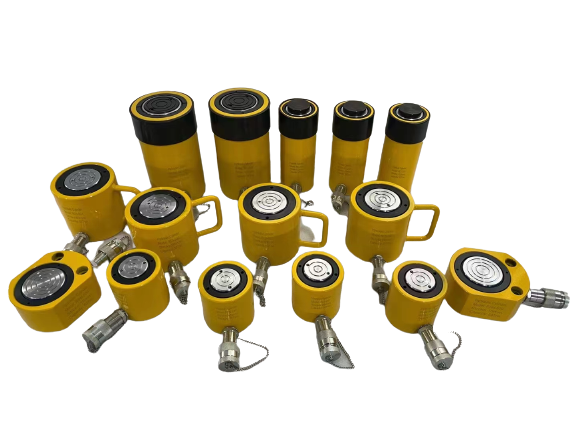
LONGLOOD se uitgebreide reeks hidrouliese silinders en domkragstelsels, stel die standaard vir uitnemendheid in vervaardiging. As 'n groot speler in die bedryf in China, ons voorsien ons kliënte wêreldwyd regstreeks met die nuutste domkrag- en opheffingsoplossings teen direkte fabriekspryse, bekostigbaarheid te verseker sonder om kwaliteit in te boet.
Direkte vervaardiger van hidrouliese silinders, mededingende fabriek-direkte pryse.
Inhoudsopgawe
Verskillende tipes hidrouliese silinders LONGLOOD voorrade
- Enkelwerkende hidrouliese silinders
LONGLOOD bied enkelwerkende hidrouliese silinders, wat die eenvoudigste tipe is. Hierdie silinders oefen hidrouliese krag deur 'n enkele poort uit, tipies vir plunjer verlenging. Die terugkeer na die beginposisie word vergemaklik óf deur die vrag se gewig óf deur a ingeboude terugkeerveer.
LONGLOOD verskaf dubbelwerkende hidrouliese silinders, gebruik te maak van hidrouliese vloei om die suier te bevorder en terug te trek. Toegerus met twee verbindingspoorte, hierdie silinders benodig 'n versoenbare pomp om hidrouliese vloei in beide rigtings te verskaf. Die voordele sluit in vinniger en meer beheerde terugtrekking, wat hulle geskik maak vir toepassings wat druk- en trekkragte met herhaalbare akkuraatheid vereis.
- Hidrouliese silinders vir trektoepassings
LONGLOOD se hidrouliese silinders vir trektoepassings is ontwerp vir take soos kabel- en staafspanning. Tipies enkelwerkend met veerterugkeer.
LONGLOOD bied borgmoersilinders, ideaal vir toepassings wat uitgebreide vraghou vereis. Hierdie kenmerk is beskikbaar vir verskillende silindertipes, insluitend lae hoogte, liggewig, of hoë-tonnage modelle.
- LONGLOOD se hol plunjer hidrouliese silinders
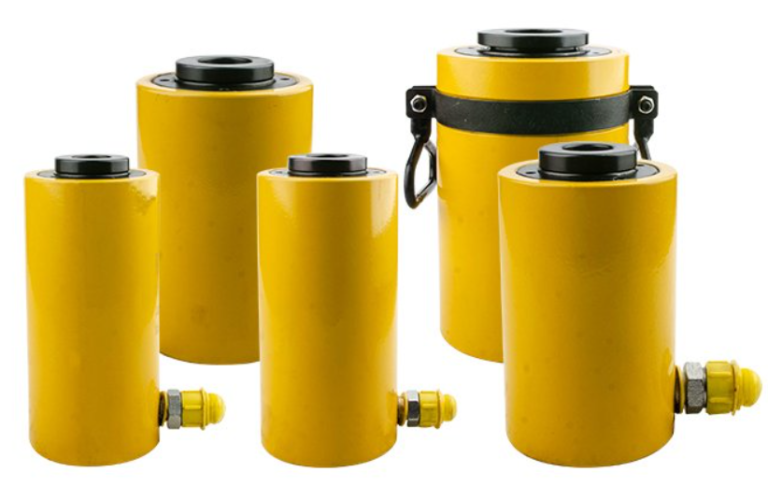
Ook bekend as middelgatsilinders, lewer beide trek- en drukkragte. Met 'n interne draad om vas te maak aan die item wat getrek word, hulle kom in enkelwerkend of dubbelwerkend variante, staal of aluminium bouwerk, en kan verwyderbare saals en staalbasisplate insluit.
- Teleskopiese hidrouliese silinders
LONGLOOD se teleskopiese hidrouliese silinders bied uitgebreide slagvermoë in beperkte ruimtes. Die teleskopiese aksie maak dit moontlik om vragte na 'n groter afstand te lig sonder om tydelik te krimp. By die keuse van 'n teleskopiese silinder, gebruikers moet die maksimum vragkapasiteit oorweeg, wat afneem soos dit uitbrei.
- Liggewig hidrouliese silinders
LONGLOOD bied hidrouliese silinders van aluminium geskik vir verskeie toepassings. Kombineer kapasiteit en krag met ligter gewig, aluminiumsilinders is makliker om te vervoer en te plaas. Bestand teen korrosie, hulle is goed geskik vir bytende omgewings en is beskikbaar in standaard konfigurasies met geharde staal saals en basisplate.
- Tie-Rod Hidrouliese silinders
LONGLOOD se trekstangsilinders is met 'n kop gebou, basis, en silindervat wat deur trekstange verbind is. Hierdie aanbiedinge van LONGLOOD bied 'n omvattende reeks om aan verskeie operasionele vereistes te voldoen.


Waarom hidrouliese slotte gebruik
Hidrouliese slotte, ook bekend as hidrouliese sluitmeganismes, word in verskeie toepassings vir spesifieke doeleindes gebruik. Hier is 'n paar algemene redes waarom hidrouliese slotte gebruik word:
Beurtkrag:
Hidrouliese slotte word dikwels gebruik om vragte in 'n vaste posisie te hou. Deur 'n hidrouliese sluitmeganisme te gebruik, die stelsel kan stabiliteit handhaaf en ongewenste bewegings of wegdrywing voorkom.
Veiligheid en Sekuriteit:
In toepassings waar veiligheid 'n kritieke bekommernis is, hidrouliese slotte bied 'n veilige manier om onbedoelde beweging te voorkom. Dit is veral belangrik in situasies waar daar menslike operateurs of werkers in die nabyheid van hidrouliese toerusting kan wees.
Posisionering akkuraatheid:
Hidrouliese slotte word gebruik om presiese posisionering van komponente of stelsels te verkry. Deur sekere elemente hidroulies te sluit, dit verseker akkuraatheid in die plasing en belyning van masjinerie of gereedskap.
Energiebesparing:
Hidrouliese slotte kan bydra tot energiebesparing in hidrouliese stelsels. Deur 'n silinder in 'n spesifieke posisie te sluit, dit skakel die behoefte uit om voortdurend hidrouliese druk te verskaf om daardie posisie te behou, lei tot energiebesparing.
Noodremstelsels:
Hidrouliese slotte is in sommige noodremstelsels geïntegreer. In die geval van 'n mislukking of noodsituasie, die hidrouliese slot kan inskakel om beweging te stop en verdere skade of besering te voorkom.
Swaar vrag hantering:
In toepassings waar swaar vragte opgelig of gemanipuleer moet word, hidrouliese slotte bied 'n manier om die vrag veilig in posisie te hou sonder die konstante behoefte aan hidrouliese druk.
Beheerde Beweging:
Hidrouliese slotte dra by tot beheerde en gereguleerde beweging in hidrouliese stelsels. Hulle verseker dat bewegings presies plaasvind en nie deur eksterne kragte beïnvloed word nie.
Verminderde hidrouliese stelsellekkasie:
Deur hidrouliese slotte te gebruik, die behoefte aan konstante hidrouliese druk om 'n spesifieke posisie te handhaaf word uitgeskakel. Dit kan die risiko van hidrouliese stelsel lekkasie verminder en bydra tot die algehele doeltreffendheid van die stelsel.
Voorkom drif:
Hidrouliese slotte is doeltreffend om wegdrywing te voorkom, wat na die stadige verwys, onbedoelde beweging van hidrouliese aandrywers as gevolg van interne lekkasie. Die slot verseker dat die aandrywer in die verlangde posisie bly sonder om te dryf.
Verbeterde stabiliteit in swaar toerusting:
In swaar masjinerie soos hyskrane, graafmachines, of laaiers, hidrouliese slotte dra by tot stabiliteit tydens optel- of laaibedrywighede. Hulle help om skielike bewegings of ineenstortings te voorkom wat gevaarlik kan wees.
Dit is belangrik om daarop te let dat die gebruik van hidrouliese slotte afhang van die spesifieke vereistes van die toepassing. Die besluit om hidrouliese slotte in 'n stelsel in te sluit, is gebaseer op faktore soos veiligheidsregulasies, presisievereistes, las eienskappe, en operasionele oorwegings.
Hoe om 'n Hidrouliese Clinder te identifiseer ?
Die identifisering van 'n hidrouliese silinder behels die ondersoek van sy fisiese eienskappe, merke, en spesifikasies.
Gidse om jou te help om 'n hidrouliese silinder te identifiseer:
Fisiese ondersoek
Grootte en Vorm: Meet die fisiese afmetings van die silinder, insluitend die boor deursnee, staaf deursnee, en algehele lengte. Hierdie inligting help om die silinder se grootte te bepaal.
Monteer styl: Let op die monteerstyl, wat spleet kan wees, flens, trunnion, of ander konfigurasies. Dit is van kardinale belang om te verstaan hoe die silinder aan die toerusting geheg is.
Silinder spesifikasies
Bedryfsdruk: Identifiseer die maksimum bedryfsdruk van die silinder. Hierdie inligting is van kritieke belang om te verseker dat die vervangingssilinder aan die stelsel se vereistes voldoen.
Boor en staaf deursnee
Bevestig die deursnee van die boor (binnedeursnee van die silinder) en staaf deursnee (buitenste deursnee van die staaf). Hierdie spesifikasies beïnvloed die silinder se krag- en spoedvermoëns.
Slaglengte
Bepaal die slaglengte, wat die maksimum afstand is wat die staaf in en uit die silinder kan beweeg.
Montagekonfigurasie
Einde Mounts: Ondersoek die eindmonterings of hegpunte van die silinder. Let op die tipe bevestigings, soos spleet, flens, of trunion mounts. Dit help om die silinder se toepassing te identifiseer.
Staaf einde kenmerke
Staaf einde Aanhegsels: Kyk of die staafkant enige aanhegsels of kenmerke het, soos oë of spieëls. Dit kan spesifieke funksies of toepassings aandui.
Seël tipe
Seëls en pakkings: Inspekteer die seëls en pakkings op die silinder. Verskillende soorte seëls, soos stangseëls en suierseëls, dien spesifieke doeleindes en kan insigte in die silinder se ontwerp verskaf.
Kyk vir slytasie of skade
Dra patrone: Soek slytasiepatrone op die staaf en silinderliggaam. Oormatige slytasie of skade kan probleme met die silinder se werking of instandhouding aandui.
11 Stappe om die regte hidrouliese silinder te kies
Stap 1: Definieer toepassingsvereistes:
Verstaan die toepassing se vereistes duidelik, insluitend die laaivermoë, slag lengte, bedryfsomgewing, en spoed van werking.
Bepaal las- en kragvereistes:
Bereken die krag of vrag wat die hidrouliese silinder moet hanteer. Maak seker dat die geselekteerde silinder 'n voldoende laaivermoë het vir die toepassing.
Stap 2: Kies tipe silinder:
Oorweeg die tipe hidrouliese silinder gebaseer op jou toepassingsbehoeftes. Algemene tipes sluit enkelwerkende in, dubbelwerkend, teleskopies, en soos bogenoemde tipes. Elke tipe het spesifieke voordele en beperkings.
Stap 3:Oorweeg die bedryfsomgewing:
Evalueer die omgewingstoestande waarin die hidrouliese silinder sal werk. Faktore soos temperatuur, humiditeit, en blootstelling aan korrosiewe stowwe kan die keuse van materiale en bedekkings beïnvloed.
Stap 4:Bepaal Slaglengte:
Bepaal die vereiste slaglengte, wat die afstand is wat die hidrouliese silinder moet beweeg. Maak seker dat die gekose silinder die nodige slag verskaf om aan die toepassing se vereistes te voldoen.
Stap 5:Evalueer spoedvereistes:
Oorweeg die spoed waarteen die hidrouliese silinder moet werk. Verskillende toepassings kan verskillende spoedvermoëns vereis, en die silinder se ontwerp moet hierdie vereistes akkommodeer.
Stap 6:Gaan monteeropsies na:
Evalueer die beskikbare spasie en monteringsopsies vir die hidrouliese silinder. Kies 'n silinderontwerp wat binne die ruimtebeperkings pas en gepaste monteerkonfigurasies bied.
Stap 7: Kies silindermateriaal:
Kies die silindermateriaal gebaseer op die spesifieke omgewingstoestande en die tipe vrag wat dit sal hanteer. Algemene materiale sluit staal in, vlekvrye staal, en aluminium, elk met sy eie stel voordele.
Stap 8: Hersien seël- en dramateriale:
Gee aandag aan die seëls en laers wat in die hidrouliese silinder gebruik word. Maak seker dat hulle versoenbaar is met die hidrouliese vloeistof en die bedryfstoestande kan weerstaan om lekkasies en voortydige slytasie te voorkom.
Stap 9: Oorweeg silinderkenmerke:
Evalueer bykomende kenmerke soos kussing vir beheerde vertraging, posisie terugvoer toestelle, en staafbedekkings vir verbeterde duursaamheid. Kies kenmerke wat die algehele werkverrigting en langlewendheid van die hidrouliese silinder verbeter.
Stap 10: Gaan sertifisering en standaarde na:
Verifieer dat die hidrouliese silinder aan industriestandaarde en -sertifisering voldoen. Dit verseker dat dit voldoen aan veiligheids- en prestasievereistes.
Soek leiding by LONGLOOD, ons is toonaangewende vervaardigers en verskaffers van hoë tonnage hidrouliese silinders. Ons kan kundigheid verskaf, beveel geskikte opsies aan op grond van jou aansoek, en help met enige spesifieke aanpassingsbehoeftes.
Stap 11: Begrotingsoorwegings:
Neem begrotingsbeperkings in ag en vergelyk verskillende hidrouliese silinderopsies gebaseer op kostedoeltreffendheid en langtermynbetroubaarheid.
Deur hierdie faktore noukeurig te oorweeg en met ons verkoopskundiges te konsulteer, jy kan 'n geskikte hidrouliese silinder kies wat aan die spesifieke behoeftes van jou toepassing voldoen, verseker optimale werkverrigting en lang lewe. Indien meer vrae kontak ons asseblief.
Gidse oor hoe om 'n hidrouliese silinder met 'n pomp te pas?
Verstaan die basiese beginsels
Hidrouliese stelsel basiese beginsels:
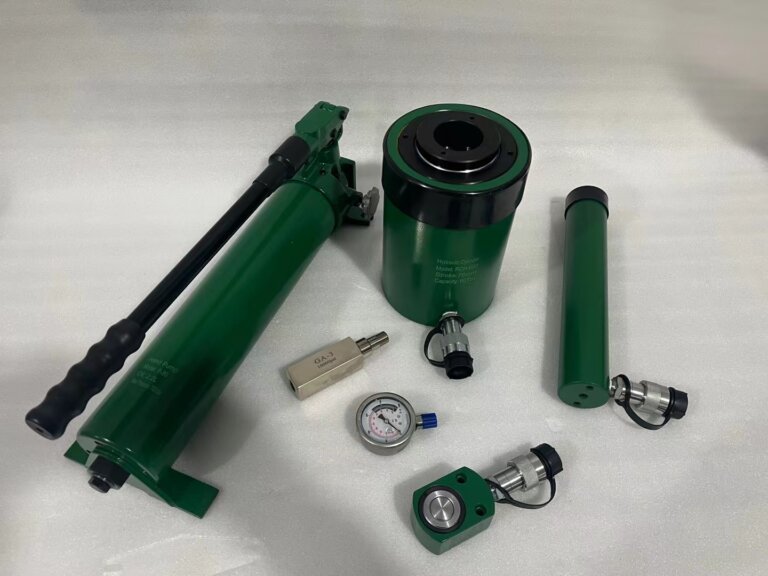
'n Hidrouliese stelsel bestaan uit komponente soos pompe, silinders, kleppe, en slange. Die pomp genereer hidrouliese druk, wat deur die vloeistof oorgedra word om die silinder te aktiveer.
Tipes hidrouliese pompe wat ons gebruik:
Suierpompe: Meer kompleks in vergelyking met ratpomp, in staat is tot hoër druk, en geskik vir swaardienstoepassings.
Bepaling van hidrouliese silindervereistes:
Definieer toepassingsvereistes:
Verstaan die spesifieke vereistes van jou aansoek, insluitend vragvermoë, spoed, en slaglengte.
Bereken krag en druk:
Bereken die krag wat nodig is om die vrag te beweeg deur die hidrouliese silinder te gebruik. Druk word dan bepaal deur krag deur die silinderoppervlakte te deel.
Bepaal die tipe silinder:
Kies die toepaslike tipe hidrouliese silinder (enkelwerkend, dubbelwerkend, ens.) gebaseer op u toepassingsbehoeftes.
Kies die regte pomp:
Ons gebruik suierpompe wat hoër druk hanteer.
Oorweeg vloeivereistes:
Bepaal die vereiste vloeitempo van die hidrouliese vloeistof, gewoonlik gemeet in liter per minuut (GPM). Die pomp se vloeitempo moet aan die stelsel se vereistes voldoen of oorskry.
Gaan drukgradering na:
Maak seker dat die pomp se drukgradering ooreenstem met of oorskry die druk wat deur die hidrouliese silinder vereis word. Oorweeg veiligheidsfaktore en potensiële drukspykers tydens werking.
Reken vir doeltreffendheid:
Oorweeg die doeltreffendheid van die pomp. Doeltreffendheid beïnvloed die hoeveelheid insetkrag wat nodig is om hidrouliese druk op te wek. Hoër doeltreffendheid verminder energieverbruik.
Evalueer pompgrootte
Kies 'n pompgrootte wat die silinder se grootte en spoedvereistes aanvul. Die pomp moet in staat wees om die nodige vloei en druk te lewer vir doeltreffende silinderwerking.
Verseker verenigbaarheid:
Gaan pomp en silinderverbinding na:
Maak seker dat die pomp en hidrouliese silinder versoenbare verbindingsvlakke het, insluitend toebehore, hawens, en draadgroottes.
Oorweeg vloeistofversoenbaarheid:
Verifieer dat die hidrouliese vloeistof wat gebruik word, versoenbaar is met beide die pomp en die silinder. Onversoenbare vloeistowwe kan lei tot seëldegradasie en stelselmislukking.
Soek professionele van ons kundiges
Ons kan waardevolle insigte verskaf op grond van u spesifieke toepassingsvereistes.
Hersien Stelseldinamika:
Oorweeg die algehele stelseldinamika, insluitend die wisselwerking tussen die pomp, silinder, en ander komponente. Stelsel ondoeltreffendheid kan ontstaan as gevolg van wanpas komponente.
Toets en aanpassing
Voer stelseltoetse uit:
Voer toetse uit met die geselekteerde pomp en silinder om te verseker dat hulle harmonieus werk. Monitor stelselwerkverrigting en maak aanpassings indien nodig.
Gereelde instandhouding
Implementeer 'n gereelde instandhoudingskedule om die lang lewe en doeltreffendheid van die hidrouliese stelsel te verseker.
Dokumentasie:
Hou rekords:
Hou rekords van die pomp- en silinderspesifikasies, bedryfsparameters, en enige wysigings aangebring. Hierdie dokumentasie is waardevol vir probleemoplossing en toekomstige verwysing.
Afsluiting
Om 'n hidrouliese silinder met 'n pomp te pas, behels 'n gedetailleerde begrip van die toepassing, lasvereistes, en sisteemdinamika. Deur hierdie stappe te volg en professionele advies van ons verkoopskundiges in te win, jy kan 'n goed gepaste en doeltreffende hidrouliese stelsel vir jou spesifieke behoeftes verseker. Koop van China hidrouliese silindervervaardiger soos LONGLOOD kan jou baie tyd bespaar.
Waarvoor word 'n hol hidrouliese silinder gebruik?
'n Hol hidrouliese silinder, ook bekend as 'n hol plunjer silinder of middel-gat silinder, is 'n tipe hidrouliese silinder wat 'n hol middel langs die lengte van die suierstang het. Hierdie ontwerp het spesifieke toepassings waar die hol spasie vir 'n spesifieke doel benut word. Hier is algemene gebruike vir hol hidrouliese silinders:
Spanning Toepassings:
Hol hidrouliese silinders word dikwels gebruik in toepassings waar spanning of trekkrag vereis word. Die hol ruimte maak voorsiening vir die deurgang van 'n staaf of kabel deur die middel, wat die silinder in staat stel om krag toe te pas terwyl die verlengde lengte van die materiaal wat gespan word, akkommodeer.
Kabel- en draadspanning:
In nywerhede soos konstruksie, brug bou, of kabelstaafstrukture, hol hidrouliese silinders word gebruik om kabels of drade te span. Die kabels kan deur die hol middel van die silinder geryg word, en hidrouliese druk word toegepas om die vereiste spanning op te wek.
Buig van pyp en buis:
Hol hidrouliese silinders word in pyp- en buisbuigmasjiene gebruik. Die hol spasie laat die silinder toe om met die pyp of buis in te skakel terwyl die materiaal wat gebuig word, akkommodeer. Dit is algemeen in toepassings soos metaalvervaardiging en konstruksie.
Materiaal trek en vashou:
Hol silinders is geskik vir toepassings waar materiaal getrek of in plek gehou moet word. Die sentrale opening maak voorsiening vir die deurgang van materiaal deur die silinder, fasilitering van prosesse soos trek, hou, of klem.
Reddings- en hersteloperasies:
In noodsituasies, hol hidrouliese silinders kan vir reddings- en hersteloperasies gebruik word. Byvoorbeeld, hulle kan gebruik word om swaar voorwerpe of strukture in beperkte ruimtes op te lig of te trek, waar die hol spasie die gebruik van kabels of stawe vergemaklik.
Hidrouliese Spanners:
Hol hidrouliese silinders word algemeen gebruik in hidrouliese spanstelsels, waar presiese en beheerde spanning van boute of hegstukke vereis word. Die hol ontwerp maak voorsiening vir die inbring van 'n spangereedskap deur die silinder, verseker akkurate en doeltreffende spanning.
Toets en Kalibrasie:
Hol silinders kan gebruik word in toets- en kalibrasietoepassings waar krag of spanning op verskeie materiale of komponente toegepas moet word. Die sentrale opening akkommodeer die toetstoerusting of toestelle.
Hidrouliese domkragte met deurgatontwerp:
Sommige hidrouliese domkragte, veral dié wat ontwerp is vir gespesialiseerde toepassings, beskik oor 'n deur-gat ontwerp. Dit maak voorsiening vir veelsydige gebruik waar materiale, gereedskap, of komponente kan tydens werking deur die domkrag beweeg.
Die belangrikste voordeel van hol hidrouliese silinders is hul veelsydigheid om bykomende materiale of strukture deur die sentrale opening te akkommodeer, maak hulle geskik vir toepassings waar spanning word, trek, of deur materiaal is nodig.
Wat is plunjer in hidrouliese silinder?
In 'n hidrouliese silinder, die suier is 'n kritieke komponent wat heen en weer binne die silinder beweeg om lineêre beweging te genereer. Die suier word ook algemeen na verwys as die suier of staaf, en dit is tipies aan 'n suierkop of direk aan die einde van die suier geheg. Die terme “suier” en “suier” word dikwels uitruilbaar gebruik in die konteks van hidrouliese silinders.
Hier is die belangrikste kenmerke en funksies van die suier in 'n hidrouliese silinder:
Konstruksie:
Die suier is 'n silindriese staaf wat vanaf die een kant van die hidrouliese silinder strek. Dit is tipies gemaak van hoë-sterkte materiale soos staal om die kragte en druk betrokke by hidrouliese toepassings te weerstaan.
Aanhegting aan Suier:
In sommige hidrouliese silinders, die suier is aan 'n suierkop gekoppel, 'n enkele eenheid vorm. Die suier en suier werk saam om hidrouliese vloeistof binne die silinder te verplaas en lineêre beweging te genereer.
Seël:
Die suier is toegerus met seëls, soos O-ringe of ander tipes hidrouliese seëls, om te verhoed dat hidrouliese vloeistof tussen die binne- en buitekant van die silinder lek. Behoorlike verseëling is van kardinale belang vir die doeltreffendheid en betroubaarheid van die hidrouliese stelsel.
Lineêre Beweging:
Soos hidrouliese druk aan die een kant van die suier toegepas word, dit genereer 'n krag wat veroorsaak dat die suier lineêr binne die silinder beweeg. Hierdie lineêre beweging word dan gebruik om verskeie meganiese take uit te voer, soos optel, stoot, of trek.
Enkelspel vs. Dubbelwerkende silinders:
In enkelwerkende hidrouliese silinders, hidrouliese druk word aan die een kant van die suier toegepas, veroorsaak dat die suier uitsteek. Die terugslag word tipies bereik deur 'n eksterne krag (soos swaartekrag of 'n veer). In dubbelwerkende silinders, hidrouliese druk word aan beide kante van die suier toegepas, wat die suier toelaat om uit te trek en terug te trek gebaseer op die rigting van hidrouliese druk.
Beëindig aanhegsels:
Die einde van die suier kan verskeie aanhegsels of monteerkenmerke hê, afhangende van die spesifieke toepassing. Hierdie aanhangsels kan oë insluit, klawers, of ander verbindingspunte om die suier aan eksterne komponente te koppel.
Leiding en belyning:
Die suier word gelei en in lyn met die hidrouliese silinder om gladde en presiese beweging te verseker. Laers of ander leimeganismes kan ingewerk word om wrywing en slytasie te verminder.
Materiaal en bedekkings:
Suiers word dikwels gemaak van materiale met hoë treksterkte en kan bedek of behandel word vir verhoogde duursaamheid en weerstand teen slytasie, korrosie, of ander omgewingsfaktore.
Om die rol en eienskappe van die suier in 'n hidrouliese silinder te verstaan, is noodsaaklik vir die ontwerp en keuse van die toepaslike hidrouliese stelsel vir 'n gegewe toepassing. Die plunjer se beweging vertaal hidrouliese druk in meganiese werk, wat hidrouliese silinders toelaat om 'n wye reeks take in verskeie industrieë te verrig.
Wat is 'n hoë tonnemaat hidrouliese silinder?
Belangrike kenmerke en kenmerke van hoë-tonnage hidrouliese silinders sluit in:
Hoë laaivermoë:
Hoë-tonnage hidrouliese silinders is ontwerp om vragte te hanteer wat die kapasiteit van standaard hidrouliese silinders oorskry. Hulle kan aansienlike krag genereer, tipies wissel van honderde tot duisende ton.
Groot boorgroottes:
Hierdie silinders het dikwels groter boorgroottes in vergelyking met standaardsilinders. Die groter boring maak voorsiening vir 'n groter volume hidrouliese vloeistof om op die suier in te werk, lei tot hoër kragopwekking.
Robuuste konstruksie:
Hoë-tonnage silinders is gebou met swaardiens materiale om die uiterste kragte en vragte te weerstaan wat hulle bedoel is om te hanteer. Dit sluit die gebruik van hoësterkte-legeringsstaal en gevorderde vervaardigingstegnieke in.
Hoëdruk werking:
Hierdie silinders is ontwerp om teen hoë hidrouliese druk te werk om die nodige krag te verkry. Die hidrouliese stelsel wat die silinder voorsien, kan hoëdrukpompe en komponente insluit om aan die vereistes van die toepassing te voldoen.
Spesiale verseëlingstelsels:
As gevolg van die hoë magte betrokke, hoë-tonnage hidrouliese silinders bevat dikwels gespesialiseerde seëlstelsels om effektiewe verseëling te verseker en hidrouliese vloeistoflekkasie te voorkom. Dit sluit robuuste seëls en verpakkingsreëlings in.
Veelsydige montage-opsies:
Hoë-tonnage silinders kom met veelsydige montering opsies om verskillende installasie vereistes te akkommodeer. Hierdie buigsaamheid maak voorsiening vir integrasie in verskeie swaar masjinerie en industriële toerusting.
Verlengde slaglengtes:
Hierdie silinders kan ontwerp word om verlengde slaglengtes te bied, wat voorsiening maak vir 'n wye reeks beweging in toepassings waar aansienlike bewegings vereis word.
Aanpassing vir spesifieke toepassings:
Hoë-tonnage hidrouliese silinders word dikwels aangepas op grond van die spesifieke behoeftes van die toepassing. Dit kan pasgemaakte afmetings insluit, spesiale staafbedekkings, of unieke eindaanhegsels.
Aansoeke:
Algemene toepassings vir hoë-tonnage hidrouliese silinders sluit in swaar opteltoerusting, metaalvormende perse, smeeperse, mynbou toerusting, skeepswerf masjinerie, en ander swaar industriële prosesse.
Veiligheidsoorwegings:
As gevolg van die geweldige kragte wat betrokke is, veiligheid is 'n kritieke oorweging wanneer daar met hoë-tonnage hidrouliese silinders gewerk word. Behoorlike installasie, onderhoud, en voldoening aan veiligheidstandaarde is noodsaaklik.
Dit is belangrik om daarop te let dat die term “hoë tonnage” is relatief en kan wissel na gelang van die industrie en toepassing.
Hoe om die regte hidrouliese slang te kies ?
Die keuse van die regte hidrouliese slang vir jou projek is noodsaaklik om optimale werkverrigting te verseker, veiligheid, en lang lewe. Hier is 'n paar belangrike stappe en oorwegings om jou te help lei in die keuse van die regte hidrouliese slang:
Verstaan Stelselvereistes:
Ken die druk, temperatuur, en vloeitempo vereistes van jou hidrouliese stelsel. Hierdie faktore sal die tipe en spesifikasies van die benodigde slang beïnvloed.
Bepaal slanggrootte:
Kies die toepaslike slanggrootte gebaseer op die vloeitempo en snelheid wat benodig word vir jou toediening. Die slanggrootte moet ooreenstem met die stelsel se vereistes om ondoeltreffendheid of potensiële skade te voorkom.
Oorweeg vloeistofversoenbaarheid:
Maak seker dat die hidrouliese slang versoenbaar is met die tipe hidrouliese vloeistof wat in jou stelsel gebruik word. Verskillende slange is ontwerp om verskillende soorte hidrouliese vloeistowwe te weerstaan, insluitend olie, water, en sintetiese vloeistowwe.
Gaan temperatuurreeks na:
Verifieer die temperatuurreeks van die hidrouliese stelsel. Kies 'n hidrouliese slang wat die temperatuur uiterstes van jou bedryfsomgewing kan weerstaan. Oorweeg beide die vloeistoftemperatuur en die omgewingstemperatuur.
Evalueer slangkonstruksie:
Hidrouliese slange kom in verskillende konstruksies voor, soos rubber, termoplastiese, of hibriede materiale. Oorweeg die spesifieke vereistes van jou aansoek en die toestande wat die slang in die gesig staar, insluitend skuur, buigsaamheid, en gewig.
Bepaal drukgradering:
Verstaan die maksimum werkdruk van jou hidrouliese stelsel. Kies 'n hidrouliese slang met 'n drukgradering wat die maksimum druk in jou stelsel oorskry om 'n veiligheidsmarge te bied.
Evalueer slangeindverbindings:
Kies slangeindverbindings wat versoenbaar is met jou stelselkomponente. Algemene eindverbindings sluit JIC in, NPT, SAE, en ander. Verseker 'n behoorlike pas om lekkasies te voorkom en stelselintegriteit te behou.
Oorweeg buigradius:
Evalueer die minimum buigradius van die hidrouliese slang. Dit is van kardinale belang vir toepassings met beperkte spasies of komplekse roetes. Vermy die oorskryding van die minimum buigradius om slangskade te voorkom.
Rekening met die lengte van die slang:
Bepaal die vereiste slanglengte gebaseer op die uitleg van jou hidrouliese stelsel. Vermy oormatige slanglengtes, aangesien dit tot drukval kan lei en stelselprestasie kan beïnvloed.
Faktor in Omgewingstoestande:
Oorweeg die omgewingstoestande wat die hidrouliese slang in die gesig staar, soos blootstelling aan sonlig, chemikalieë, of skuurmateriaal. Kies 'n slang met die toepaslike dekmateriaal om hierdie toestande te weerstaan.
Gaan nakoming en sertifisering na:
Maak seker dat die hidrouliese slang aan industriestandaarde en sertifisering voldoen. Kyk vir merke wat aandui dat aan spesifikasies soos SAE voldoen word, ISO, of DIN-standaarde.
Raadpleeg verskaffers:
Hoe om 'n dubbelwerkende hidrouliese silinder op te spoor?
Jy kan 'n dubbelwerkende silinder raaksien deur na die volgende kenmerke te soek:
Aantal poorte:
'N Dubbelwerkende silinder sal twee verbindingspoorte hê - tipies een aan elke kant. Dit is in teenstelling met enkelwerkende silinders, wat net een poort het.
Rod End en Cap End:
Dubbelwerkende silinders het dikwels benamings soos “staaf einde” en “dop einde.” Dit verwys na die twee punte van die silinder waar hidrouliese vloeistof toegedien word om die suier uit te brei of terug te trek.
Suierstang:
Let op die suierstang. In 'n dubbelwerkende silinder, die suierstang kan uit- en terugtrek gebaseer op die toepassing van hidrouliese druk aan enige kant.
Toepassingskonteks:
Oorweeg die toepassingskonteks. Dubbelwerkende silinders word algemeen gebruik in situasies waar tweerigtingkrag en beheerde beweging vereis word, soos in materiaalhanteringstoerusting, hidrouliese perse, en vervaardigingsprosesse.
Hidrouliese pompversoenbaarheid:
Dubbelwerkende silinders benodig 'n versoenbare hidrouliese pomp wat hidrouliese vloei in beide rigtings kan verskaf. Die teenwoordigheid van 'n hidrouliese pomp met tweerigtingvermoëns is 'n aanduiding van 'n dubbelwerkende stelsel.
Beheer kleppe en lyne:
In hidrouliese stelsels met dubbelwerkende silinders, jy kan beheerkleppe en hidrouliese lyne vind wat die beheerde vloei van hidrouliese vloeistof na beide kante van die silinder vergemaklik.
Hidrouliese silinders wat gebruik word vir trektake
Hidrouliese silinders wat vir trektake gebruik word, is spesifiek ontwerp om krag uit te oefen in die rigting van terugtrekking. Daar word dikwels na hierdie silinders verwys as treksilinders of spanningsilinders. Anders as tipiese hidrouliese silinders wat hoofsaaklik ontwerp is vir stoot- of opheffingstoepassings, treksilinders is geoptimaliseer vir take wat die trek van vragte of spanelemente behels. Hier is 'n paar sleutelkenmerke en toepassings van hidrouliese silinders wat vir trektake gebruik word:
Enkelwerkende konfigurasie
Treksilinders is dikwels enkelwerkend, wat beteken dat hidrouliese druk toegepas word om die silinder uit te brei, en die terugtrekking word verkry deur 'n eksterne krag soos 'n veer of die las self. Hierdie ontwerp is geskik vir take waar die trekkrag in een rigting vereis word.
Lente-terugkeermeganisme
Baie treksilinders het 'n veer-terugvoermeganisme om die silinder outomaties terug te trek wanneer hidrouliese druk vrygestel word. Dit vergemaklik die operasie en maak voorsiening vir doeltreffende gebruik in herhalende take.
Kabel- en draadspanning
Treksilinders word algemeen gebruik in toepassings waar kabels, drade, of ander materiale moet gespan word. Byvoorbeeld, in brugkonstruksie of kabelstaafstrukture, hidrouliese treksilinders kan gebruik word om die nodige spanning te verskaf.
Anker- en kabelspanning in konstruksie:
In konstruksie toepassings, treksilinders word gebruik vir take soos ankerspanning of kabelspanning in nagespanne betonstrukture. Die silinder trek en span die kabels om strukturele integriteit te verbeter.
Mariene en buitelandse toepassings:
Treksilinders vind gebruik in mariene en buitelandse toepassings vir take soos om vasmeerlyne te span, hef- en spantoerusting op skepe, of swaar vragte op vaartuie te trek.
Mynbou en steengroef
In myn- en steengroefbedrywighede, treksilinders kan gebruik word vir die span van draadtoue of kabels wat in verskeie masjinerie gebruik word vir die opheffing en vervoer van materiaal.
Tieback Tensioning in Geotegniese Ingenieurswese
Treksilinders speel 'n rol in geotegniese ingenieurswese, veral in grond- en rotsstabilisering. Hulle word gebruik vir terugbindspanningstelsels om stabiliteit aan strukture soos keermure te verskaf.
Trek en belyn komponente in vervaardiging:
In vervaardigingsprosesse, treksilinders kan gebruik word vir take soos belyning en spanning van komponente tydens samestelling. Die beheerde trekkrag verseker presiese posisionering.
Pyplynstring in die olie- en gasbedryf:
Treksilinders word in die olie- en gasindustrie gebruik in pyplynstringbedrywighede. Hulle help om dele van die pypleiding in posisie te trek en dit tydens die installasieproses te span.
Nood- en Reddingsoperasies
In noodsituasies, treksilinders kan vir reddings- en hersteloperasies gebruik word. Hulle kan gebruik word om puin of strukture uitmekaar te trek om toegang tot vasgekeerde individue te kry.
Wanneer 'n hidrouliese silinder vir trektake gekies word, faktore soos vragvermoë, slag lengte, monteer opsies, en omgewingstoestande moet noukeurig oorweeg word. Dit is noodsaaklik om 'n treksilinder te kies wat aan die spesifieke vereistes van die taak voldoen en veilige en doeltreffende werking verseker.
Kenmerke, Voordele en tipiese gebruike van sluitmoer-hidrouliese silinders
Slotmoer hidrouliese silinders
Eienskappe:
Beurtkrag vir verlengde tydperke:
Die primêre kenmerk van 'n sluitmoer hidrouliese silinder is sy vermoë om vrag te hou oor lang tydperke. Dit is veral voordelig in toepassings waar 'n vrag vir 'n lang tyd veilig in 'n vaste posisie gehou moet word.
Beskikbaar in verskillende tipes:
Slotmoer-funksie is beskikbaar vir verskillende tipes hidrouliese silinders, insluitend lae hoogte, liggewig, en hoë-tonnage modelle. Hierdie buigsaamheid maak voorsiening vir die keuse van 'n borgmoersilinder gebaseer op die spesifieke vereistes van die toepassing.
Voordele:
Laai sekuriteit:
Slotmoersilinders verseker die veilige hou van 'n vrag sonder die behoefte aan deurlopende hidrouliese druk. Dit is veral van kardinale belang in toepassings waar veiligheid en stabiliteit uiters belangrik is.
Energie-doeltreffendheid:
Die sluitmoerkenmerk dra by tot energiedoeltreffendheid aangesien dit die hidrouliese stelsel toelaat om die vrag te hou sonder deurlopende kragtoevoer, energieverbruik te verminder.
Veelsydigheid:
Die beskikbaarheid van die borgmoerkenmerk in verskillende silindertipes maak hierdie silinders veelsydig, geskik vir verskeie toepassings met uiteenlopende vereistes.
Aansoeke:
Vervaardiging en Montering:
Sitmoer hidrouliese silinders word algemeen gebruik in vervaardigingsprosesse waar onderdele of komponente veilig in plek gehou moet word tydens samestelling of bewerking.
Swaardiens-industriële prosesse:
In swaardiens-industriële prosesse, soos metaalbewerking, smee, of druk, sluitmoersilinders kan swaar vragte vir lang tydperke beveilig.
Konstruksie en infrastruktuur:
Slotmoersilinders vind toepassing in konstruksie- en infrastruktuurprojekte, waar vragte veilig gehou moet word tydens take soos optel, posisionering, of bekisting.
Onderhoud en Herstel:
Tydens instandhouding en herstelwerk, sluitmoersilinders kan voordelig wees wanneer komponente in 'n vaste posisie gehou word vir inspeksie, sweiswerk, of ander prosedures.
Materiaalhantering:
Slotmoersilinders word gebruik in materiaalhanteringstoepassings waar vragte, veral swaar of delikate, moet veilig in 'n spesifieke posisie gehou word.
Oorwegings vir Locknut Hidrouliese Silinders:
Laai kapasiteit:
Kies 'n sluitmoer hidrouliese silinder met 'n toepaslike vragvermoë wat by die vereistes van die toepassing pas.
Sluitmeganisme:
Verstaan die sluitmeganisme van die silinder, of dit 'n meganiese borgmoer of 'n ander soort vraghoumeganisme is.
Tipe silinder:
Kies die regte tipe silinder (lae hoogte, liggewig, hoë tonnage, ens.) gebaseer op die spesifieke behoeftes van die toepassing.
Omgewingstoestande:
Oorweeg die omgewingstoestande waarin die silinder sal werk en kies 'n silinder met toepaslike materiale en oppervlakbehandelings vir duursaamheid.
Integrasie met hidrouliese stelsel:
Maak seker dat die sluitmoer-hidrouliese silinder naatloos met die hidrouliese stelsel integreer wat druk betref, vloei, en verenigbaarheid.
Veiligheidskenmerke:
Evalueer enige bykomende veiligheidskenmerke wat deur die silinder aangebied word, soos drukverligtingskleppe of lashoukleppe, om veilige en betroubare werking te verseker.
Wat is enkel hidrouliese silinder
'n Enkele hidrouliese silinder, ook bekend as 'n enkelwerkende hidrouliese silinder, is 'n tipe hidrouliese aandrywer wat slegs met hidrouliese vloeistofdruk in een rigting werk. Dit is 'n relatief eenvoudige ontwerp en word algemeen gebruik in verskeie industriële en mobiele toepassings waar eenrigtingkrag voldoende is om die vereiste taak uit te voer. Hier is sleutelkenmerke en kenmerke van 'n enkele hidrouliese silinder:
Eenrigting werking:
'n Enkele hidrouliese silinder werk slegs in een rigting. Hidrouliese druk word aan die een kant van die suier toegepas, veroorsaak dat dit in een rigting beweeg (óf verleng óf terugtrek). Die terugslag word tipies bereik deur 'n eksterne krag, soos 'n veer of die vrag self.
Basiese komponente:
Die basiese komponente van 'n enkele hidrouliese silinder sluit 'n silindervat in, suier, staaf (of suier), seëls, en poorte vir hidrouliese vloeistof in- en uitgang. Die hidrouliese vloeistof word onder druk geplaas om die suier uit te brei, en die terugslag word bereik deur die druk vry te laat.
Suier en Rod Ontwerp:
Die suier is die komponent binne die silinder wat die vloeistof aan die een kant van die vloeistof aan die ander kant skei. Die staaf, of suier, is aan die suier geheg en strek deur die een kant van die silinder om die uitsetkrag te verskaf.
Lente Terugkeer Opsie:
Sommige enkelhidrouliese silinders het 'n veerterugkeermeganisme. Die veer help om die suier terug te trek sodra hidrouliese druk vrygestel word. Hierdie ontwerp vereenvoudig die hidrouliese stelsel en word dikwels gebruik in toepassings waar die vrag self die nodige terugvoerkrag kan verskaf.
Aansoeke:
Enkelhidrouliese silinders vind toepassings in verskeie nywerhede, insluitend konstruksie, landbou, materiaal hantering, en motor. Algemene gebruike sluit opheffing in, druk, vasklem, en ander take waar eenrigtingkrag voldoende is.
Koste-effektiewe ontwerp:
Enkelhidrouliese silinders is dikwels meer koste-effektief as hul dubbelwerkende eweknieë vanweë hul eenvoudiger ontwerp en verminderde kompleksiteit.
Swaartekrag of eksterne krag vir terugslag:
In situasies waar 'n veer nie gebruik word nie, die terugslag kan deur swaartekrag bewerkstellig word (vir vertikaal georiënteerde silinders) of deur 'n eksterne krag wat help om die suier terug te trek.
Veelsydigheid in montage:
Enkele hidrouliese silinders kom in verskeie monteringskonfigurasies, sluitstang ingesluit, gesweis, en ander style, verskaffing van veelsydigheid in hoe hulle in verskillende stelsels geïntegreer kan word.
Kompakte grootte:
Enkelhidrouliese silinders is in kompakte groottes beskikbaar, maak hulle geskik vir toepassings waar spasie beperk is.
Veiligheidsoorwegings:
Operateurs moet versigtig wees tydens die vrystelling van druk, aangesien die terugslag op eksterne kragte staatmaak. Veiligheidsmaatreëls is noodsaaklik om onbedoelde beweging te voorkom.
Terwyl enkele hidrouliese silinders geskik is vir baie toepassings, dit is belangrik om die spesifieke vereistes van 'n taak noukeurig te oorweeg. As tweerigtingkrag nodig is, 'n dubbelwerkende hidrouliese silinder kan 'n meer gepaste keuse wees.
Wat is porta power kit ?
'n Porta-kragstel, kort vir draagbare kragstel, is 'n veelsydige hidrouliese gereedskapstel wat algemeen gebruik word vir swaardienstoepassings soos motorherstelwerk, liggaamswerk, konstruksie, en verskeie ander take wat beheerde hidrouliese krag vereis. Die stel bevat tipies hidrouliese silinders, 'n handpomp, slange, verskeie aanhangsels, en bykomstighede. Porta-kragstelle is bekend vir hul draagbaarheid, gemak van gebruik, en die vermoë om hidrouliese krag in beperkte ruimtes te verskaf.
Komponente van 'n Porta Power Kit:
Hidrouliese pomp:
Die handpomp is 'n handhidrouliese pomp wat die hidrouliese vloeistof onder druk plaas om die krag te skep wat nodig is om die hidrouliese silinders te bedryf. Dit word tipies met die hand bedryf en bied 'n draagbare kragbron.
Hidrouliese silinders:
Porta-kragstelle sluit hidrouliese silinders van verskillende groottes en konfigurasies in. Hierdie silinders kan gebruik word om te stoot, trek, opheffing, buig, of verspreiding van toepassings. Algemene tipes sluit enkelwerkende en dubbelwerkende silinders in.
Ram Aanhangsels:
Die stel kan met verskillende aanhegsels of ramme kom wat aan die hidrouliese silinders gekoppel kan word. Hierdie aanhangsels verskil in ontwerp en funksie, wat 'n wye reeks toepassings moontlik maak.
Slange:
Hoëdruk hidrouliese slange is ingesluit om die hidrouliese pomp aan die silinders te koppel. Die slange is buigsaam en laat die operateur toe om die silinders in verskillende oriëntasies te plaas.
Koppelstukke en toebehore:
Koppelstukke en toebehore word voorsien om die verbindings tussen die hidrouliese pomp vas te maak, slange, en silinders. Hulle verseker 'n veilige en lekvrye hidrouliese stelsel.
Drukmeter:
Sommige porta-kragstelle bevat 'n drukmeter om die hidrouliese druk te meet. Dit help operateurs om die krag wat tydens verskeie take toegepas word, te beheer en te monitor.
Dratas:
Baie porta-kragstelle kom met 'n stewige draagtas of boks vir gerieflike berging en vervoer. Die omhulsel help om die komponente georganiseer en beskerm te hou.
Algemene toepassings van Porta Power Kits:
Motorherstelwerk:
Porta-kragstelle word gereeld in motorherstelwerk gebruik vir take soos om rame reg te maak, buig metaal, of komponente in lyn te bring.
Liggaamswerk:
In die motor- en botsingsherstelbedryf, porta-kragstelle word gebruik vir take soos om duike uit te druk, panele in lyn te bring, of om bakwerk reg te maak.
Konstruksie:
Porta-kragstelle is nuttig in konstruksie vir take soos die opheffing van swaar voorwerpe, belyning van strukture, of die verskaffing van beheerde krag in beperkte ruimtes.
Industriële instandhouding:
Onderhouds- en hersteltake in verskeie industriële omgewings behels dikwels die gebruik van porta-kragstelle vir take soos die opheffing van masjinerie, Toerusting in lyn, of krag toe te pas waar nodig.
Reddingsoperasies:
Porta-kragstelle kan in nood- en reddingsoperasies gebruik word om swaar voorwerpe op te lig of te skuif, openinge skep, of strukture te stabiliseer.
Algemene Materiaalhantering:
Hierdie kits is veelsydige gereedskap vir algemene materiaalhanteringstake, soos stoot, trek, opheffing, of om verskeie materiale te buig.
Oorwegings by die gebruik van Porta Power Kits:
Behoorlike opleiding:
Operateurs moet behoorlik opgelei word oor die gebruik van porta-kragstelle om veilige en effektiewe werking te verseker.
Drukbeheer:
Versigtige beheer van hidrouliese druk is noodsaaklik om skade aan toerusting of besering aan personeel te voorkom.
Korrekte Aanhangselkeuse:
Die gebruik van die toepaslike aanhangsels vir die taak op hande is van kardinale belang om die gewenste resultate te bereik.
Veiligheids maatreëls:
Volg veiligheidsriglyne en gebruik toepaslike persoonlike beskermende toerusting (PPE) wanneer porta-kragstelle gebruik word.
Porta-kragstelle is waardevolle gereedskap in toepassings waar hidrouliese krag op 'n beheerde en draagbare wyse toegepas moet word. Hul veelsydigheid en gebruiksgemak maak hulle noodsaaklik vir 'n verskeidenheid take in verskillende industrieë.
Wat is hidrouliese handpomp? Wat is hidrouliese elektriese pomp? Hoe om hulle te gebruik? En hoe om te kies?
Hidrouliese handpomp:
'n Hidrouliese handpomp is 'n handaangedrewe pomp wat ontwerp is om hidrouliese druk met die hand op te wek. Dit word algemeen gebruik in hidrouliese stelsels waar 'n draagbare en handbeheerde kragbron nodig is. Hidrouliese handpompe word dikwels in toepassings soos hidrouliese domkragte gebruik, druk, en verskeie ander gereedskap wat beheerde hidrouliese krag vereis.
Hoe om 'n hidrouliese handpomp te gebruik?
Plaas die pomp:
Plaas die hidrouliese handpomp in 'n stabiele posisie, verseker dat dit veilig geanker of aan die hidrouliese stelsel vasgemaak is.
Koppel slange:
Heg hidrouliese slange aan die pomp se inlaat- en uitlaatpoorte. Verseker behoorlike verbindings om lekkasies te voorkom.
Maak die pomp voor (indien nodig):
As die hidrouliese stelsel priming vereis, volg die vervaardiger se instruksies om die pomp en hidrouliese lyne met vloeistof te vul.
Bedien die pomphefboom:
Pomp die hefboom op en af. Elke slag van die hefboom plaas die hidrouliese vloeistof onder druk, skep 'n vloei van vloeistof onder druk na die gekoppelde hidrouliese komponente.
Monitor druk en vloeistofvloei:
Afhangende van die toepassing, monitor druk met behulp van 'n meter (indien beskikbaar) en verseker dat vloeistof vloei soos bedoel.
Hou op pomp:
Hou op pomp sodra die verlangde druk of vloeistofvloei bereik is. Sommige hidrouliese handpompe kan 'n vrylaatklep hê om druk te verminder.
Veilige verbindings:
Ontkoppel die slange versigtig, en beveilig alle verbindings om lekkasies te voorkom.
Hidrouliese elektriese pomp:
'n Hidrouliese elektriese pomp is 'n pomp wat deur 'n elektriese motor aangedryf word om hidrouliese druk op te wek. Hierdie pompe word algemeen gebruik in toepassings waar deurlopende en outomatiese hidrouliese krag vereis word. Hidrouliese elektriese pompe is veelsydig en vind gebruik in verskeie industriële omgewings vir take soos opheffing, druk, buig, en meer.
Hoe om 'n hidrouliese elektriese pomp te gebruik:
Kragverbinding:
Koppel die hidrouliese elektriese pomp aan 'n kragbron met die toepaslike kragkoord of aansluiting. Maak seker dat die kragtoevoer by die pomp se vereistes pas.
Koppel slange:
Heg hidrouliese slange aan die pomp se inlaat- en uitlaatpoorte. Verseker behoorlike verbindings om lekkasies te voorkom.
Maak die pomp voor (indien nodig):
Sommige hidrouliese elektriese pompe benodig moontlik priming om te verseker dat die pomp en hidrouliese lyne met vloeistof gevul is voor werking.
Skakel die pomp aan:
Skakel die elektriese pomp aan met behulp van die beheerpaneel, skakelaar, of afstandbeheer, afhangende van die pomp se ontwerp.
Monitor werking:
Monitor die pomp se werking, insluitend druk, vloeitempo, en enige veiligheidskenmerke. Baie hidrouliese elektriese pompe het ingeboude kontroles en aanwysers.
Staak werking:
Skakel die elektriese pomp af sodra die verlangde druk, vloeitempo, of taak voltooi is.
Ontkoppel krag:
Ontkoppel die pomp van die kragbron wanneer jy klaar is. Volg behoorlike veiligheidsprosedures om elektriese gevare te vermy.
Hoe om pomp te kies?
Toepassing:
Oorweeg die spesifieke toepassing waarvoor jy die pomp benodig, of dit oplig, druk, of ander hidrouliese take.
Vloeitempo en druk:
Bepaal die vereiste vloeitempo en druk vir jou toediening. Verskillende pompe is ontwerp vir verskillende vlakke van vloei en druk.
Kragbron:
Kies tussen 'n hidrouliese handpomp en 'n hidrouliese elektriese pomp gebaseer op die beskikbaarheid van 'n kragbron, die behoefte aan oordraagbaarheid, en die frekwensie van gebruik.
Vloeistofversoenbaarheid:
Maak seker dat die pomp versoenbaar is met die tipe hidrouliese vloeistof wat jy gaan gebruik.
Omgewing:
Oorweeg die bedryfsomgewing. Byvoorbeeld, as die pomp ondergedompel moet word, 'n dompelbare elektriese pomp kan geskik wees.
Onderhoud:
Evalueer die instandhoudingsvereistes van die pomp. Sommige pompe benodig dalk meer gereelde onderhoud, terwyl ander ontwerp is vir langtermyn betroubaarheid met minimale instandhouding.
Koste:
Vergelyk die aanvanklike koste, bedryfskoste, en onderhoudskoste van verskillende pompopsies om 'n kostedoeltreffende oplossing te kies.
Handelsmerk reputasie:
Oorweeg die reputasie van die pompvervaardiger. Gevestigde en betroubare handelsmerke bied dikwels hoër gehalte en meer betroubare pompe.
Gebruikersvriendelike kenmerke:
Soek kenmerke soos maklike kontroles, ingeboude veiligheidskenmerke, en gebruikersvriendelike ontwerpe wat ooreenstem met jou voorkeure en vaardigheidsvlak.
Geraasvlak:
Oorweeg die geraasvlak wat deur die pomp geproduseer word, veral as dit in residensiële of geraas-sensitiewe omgewings gebruik sal word.
Deur jou spesifieke behoeftes noukeurig te assesseer en die faktore wat hierbo genoem word, in ag te neem, jy kan die regte hidrouliese pomp kies—of dit nou ’n handpomp of ’n elektriese pomp is—vir jou beoogde toepassing.
Wat is hidrouliese pannekoeksilinder?
'n Hidrouliese pannekoeksilinder is 'n spesifieke tipe hidrouliese aktuator wat 'n plat het, skyfagtige ontwerp. Soos sy pneumatiese eweknie, die hidrouliese pannekoeksilinder word gekenmerk deur sy kompaktheid, lae-profiel vorm, maak dit goed geskik vir toepassings waar spasie beperk is. Hierdie silinders werk met hidrouliese vloeistof (gewoonlik olie) om lineêre beweging of krag te genereer.
Belangrike kenmerke van hidrouliese pannekoeksilinders
Plat profiel: Die pannekoeksilinder het 'n afgeplatte, skyfvormige profiel, wat dit onderskei van tradisionele silindriese hidrouliese silinders. Hierdie ontwerp maak voorsiening vir installasie in stywe ruimtes en toepassings met hoogtebeperkings.
Kort slaglengte: Tipies, hidrouliese pannekoeksilinders is ontwerp vir korter slaglengtes in vergelyking met standaard hidrouliese silinders. Die slaglengte verwys na die afstand wat die suier binne die silinder beweeg.
Kompakte grootte: Die plat ontwerp dra by tot 'n kompakte algehele grootte, die maak van hidrouliese pannekoeksilinders wat geskik is vir installasies in masjinerie of stelsels met beperkte spasie.
Hidrouliese werking: Hierdie silinders gebruik hidrouliese vloeistof (soos olie) as die werkmedium. Die hidrouliese vloeistof word onder druk geplaas om krag of beweging in die suier te skep.
Aansoeke: Hidrouliese pannekoeksilinders vind toepassings in verskeie industrieë, vervaardiging ingesluit, outomatisering, en masjinerie. Hulle word dikwels gebruik in scenario's waar 'n korter slaglengte voldoende is, en 'n kompakte ontwerp is noodsaaklik.
Forseer uitset: Terwyl pannekoeksilinders bekend is vir hul spasiedoeltreffendheid, hul kraguitset kan beperk wees in vergelyking met groter hidrouliese silinders. Die kraguitset word bepaal deur faktore soos die silindergrootte, druk, en suier area.
Materiaal: Hidrouliese pannekoeksilinders word tipies gebou met materiale wat geskik is vir hidrouliese toepassings, verseker duursaamheid en weerstand teen hidrouliese vloeistof.
Hierdie silinders word gewaardeer vir hul vermoë om hidrouliese aandrywing te verskaf in toepassings waar tradisionele silindriese silinders moontlik nie prakties is nie as gevolg van ruimtelike beperkings. Die keuse van 'n hidrouliese pannekoeksilinder word deur faktore soos beskikbare spasie beïnvloed, krag vereistes, en die spesifieke behoeftes van die toepassing.
Opsommend, 'n hidrouliese pannekoeksilinder is 'n hidrouliese aktuator met 'n plat, skyfagtige ontwerp, bied 'n kompakte oplossing vir toepassings met beperkte spasie of dié wat 'n korter slaglengte benodig.
Verskille tussen aluminium hidrouliese silinders en normale hidrouliese silinders:
Verskille tussen hidrouliese silinders en normale hidrouliese silinders:
Gewig:
Hidrouliese silinder van aluminium: Aluminium is 'n liggewig materiaal, so aluminium hidrouliese silinders is oor die algemeen ligter as hul eweknieë gemaak van materiale soos staal.
Normale hidrouliese silinder: Silinders gemaak van staal of ander materiale kan swaarder wees, veral in swaardienstoepassings.
Korrosieweerstand:
Hidrouliese silinder van aluminium: Aluminium het natuurlike weerstand teen korrosie, maak aluminiumsilinders geskik vir toepassings waar blootstelling aan korrosiewe omgewings 'n bekommernis is.
Normale hidrouliese silinder: Materiale soos staal kan addisionele bedekkings of behandelings benodig om weerstand teen korrosie te verbeter.
Hitte afskeiding:
Hidrouliese silinder van aluminium: Aluminium het goeie termiese geleidingsvermoë, wat effektiewe hitteafvoer moontlik maak. Hierdie kenmerk kan voordelig wees in toepassings waar hitte-opbou bestuur moet word.
Normale hidrouliese silinder: Die hitte-afvoer eienskappe kan wissel na gelang van die materiaal wat gebruik word.
Sterkte:
Hidrouliese silinder van aluminium: Terwyl aluminium liggewig is, dit het dalk nie dieselfde sterkte as sommige ander materiale soos staal nie. Egter, vooruitgang in aluminiumlegerings het gelei tot hoë-sterkte opsies.
Normale hidrouliese silinder: Materiale soos staal is bekend vir hul sterkte, maak hulle geskik vir swaardienstoepassings.
Koste:
Hidrouliese silinder van aluminium: Die koste van die vervaardiging van aluminium hidrouliese silinders kan laer wees as dié van sommige materiale, maak hulle koste-effektief.
Normale hidrouliese silinder: Die koste kan wissel na gelang van die materiaal wat gebruik word en die spesifieke vereistes van die aansoek.
Die keuse tussen 'n aluminium hidrouliese silinder en 'n “normaal” hidrouliese silinder (tipies gemaak van materiale soos staal) hang af van die spesifieke behoeftes van die toepassing. Aluminium silinders word bevoordeel in toepassings waar gewig, weerstand teen korrosie, en termiese geleidingsvermoë is kritieke oorwegings.
Wat is hidrouliese treksilinder en hoe om te werk?
'N hidrouliese treksilinder, ook bekend as 'n hidrouliese trekker of hidrouliese treksilinder, is 'n gespesialiseerde hidrouliese gereedskap wat ontwerp is om komponente soos laers te trek of te onttrek, ratte, busse, of katrolle van skagte, spilpunte, of ander dele. Hierdie silinders gebruik hidrouliese krag om 'n beheerde trekbeweging toe te pas, wat dit nuttig maak in toepassings waar komponente styf gepas of perspas is en verwyder moet word sonder om skade te veroorsaak.
Sleutelkenmerke van hidrouliese treksilinders:
Hidrouliese aandrywing: Hidrouliese treksilinders werk volgens die beginsel van hidrouliese vloeistofdruk. Wanneer hidrouliese druk op die silinder toegepas word, dit genereer 'n trekkrag wat gebruik kan word om komponente te onttrek of te trek.
Beheerde kragtoepassing: Een van die primêre voordele van hidrouliese treksilinders is hul vermoë om 'n beheerde en presiese trekkrag toe te pas. Hierdie beheer help om skade aan beide die komponent wat getrek word en die omliggende masjinerie te voorkom.
Enkel- of dubbelwerkend: Hidrouliese trekkers kan óf enkelwerkend óf dubbelwerkend wees. Enkelwerkende silinders oefen krag in een rigting uit en maak staat op 'n eksterne krag (bv., lente of handmatige inspanning) vir die terugslag. Dubbelwerkende silinders gebruik hidrouliese druk vir beide verlenging en terugtrekking.
Veelsydigheid: Hidrouliese treksilinders kom in verskillende ontwerpe en groottes voor, wat voorsiening maak vir veelsydigheid in verskillende toepassings. Hulle kan toegerus wees met kenmerke soos verstelbare kake, verlengstawe, of modulêre konfigurasies om aan spesifieke behoeftes te voldoen.
Hoe om 'n hidrouliese treksilinder te bestuur:
Voorbereiding:
Maak seker dat die hidrouliese trekker en gepaardgaande toerusting in 'n goeie toestand is.
Kies die toepaslike grootte en tipe trekaanhegsels of kake vir die spesifieke toepassing.
Aanhegsel:
Heg die hidrouliese trekker aan die komponent wat verwyder moet word, verseker dat die trekkake die deel stewig vasgryp. Die kake kan verstelbaar wees om verskillende groottes te akkommodeer.
Posisionering:
Plaas die hidrouliese trekker en komponente op 'n manier wat 'n reguit en beheerde trekbeweging moontlik maak.
Koppel hidrouliese slange:
Koppel hidrouliese slange van die hidrouliese pomp aan die hidrouliese trekker. Maak seker dat die verbindings veilig is.
Toepassing van hidrouliese druk:
Begin die hidrouliese pomp om druk op die hidrouliese treksilinder toe te pas. Soos hidrouliese druk toeneem, die silinder oefen 'n trekkrag op die aangehegte komponent uit.
Monitering en aanpassing:
Monitor die vordering van die trekoperasie. Indien nodig, pas die posisie of belyning van die hidrouliese trekker aan vir optimale kragtoediening.
Komponent onttrekking:
Soos die hidrouliese trekker krag toepas, die styfgepasde komponent moet geleidelik begin beweeg of heeltemal uit die skag getrek word, spilpunt, of ander dele.
Los druk:
Sodra die trekbewerking voltooi is, los die hidrouliese druk en ontkoppel die hidrouliese slange.
Herhaal of skuif na volgende komponent:
As verskeie komponente verwyder moet word, herhaal die proses vir elkeen. Andersins, demonteer die hidrouliese trekker vir berging.
Veiligheidsoorwegings:
Volg altyd die vervaardiger se riglyne en veiligheidsaanbevelings vir die spesifieke hidrouliese trekker wat gebruik word.
Dra toepaslike persoonlike beskermende toerusting, insluitend veiligheidsbril en handskoene.
Verseker behoorlike belyning en posisionering om skade aan komponente of die hidrouliese trekker te voorkom.
Gebruik 'n hidrouliese pomp met die regte drukkapasiteit vir die hidrouliese trekker.
Deur hierdie stappe te volg en aan veiligheidsriglyne te voldoen, operateurs kan hidrouliese treksilinders doeltreffend en veilig gebruik om persgemonteerde komponente in verskeie industriële toepassings te verwyder.
Wat is produksie hidrouliese silinder?
'n Produksie hidrouliese silinder, dikwels na verwys as 'n industriële hidrouliese silinder, is 'n tipe hidrouliese aktuator wat ontwerp is vir gebruik in produksie- en vervaardigingsprosesse. Hierdie silinders speel 'n deurslaggewende rol in verskeie industriële toepassings waar beheerde lineêre krag nodig is om te beweeg, posisie, of komponente te manipuleer as deel van 'n produksielyn of vervaardigingstelsel.
Sleutelkenmerke van LONGLOOD-produksie-hidrouliese silinders:
Swaardiens konstruksie: Produksie-hidrouliese silinders word tipies gebou met robuuste materiale en konstruksie om die strawwe van industriële produksie-omgewings te weerstaan.
Hoësiklus prestasie: Hierdie silinders is ontwerp om gereelde gebruik te verduur, maak hulle geskik vir toepassings waar hoë-siklus werkverrigting noodsaaklik is, soos in deurlopende vervaardigingsprosesse.
Presisie en beheer: Produksie hidrouliese silinders bied presiese beheer oor lineêre beweging, wat die akkurate posisionering van komponente of gereedskap in die vervaardigingsproses moontlik maak.
Veelsydigheid: Hierdie silinders is veelsydig en kan aangepas word vir verskeie vervaardigingstake, insluitend opheffing, druk, vasklem, stoot, of trek, afhangende van die spesifieke vereistes van die produksielyn.
Monteer konfigurasies: Produksie hidrouliese silinders is ontwerp met verskillende monteringskonfigurasies om maklike integrasie in masjinerie en produksiestelsels te vergemaklik. Dit kan kraagdrade insluit, basis skroefdraadgate, plunjer einde drade, en verskeie aanhegtingsopsies soos voetmonterings, flensmonterings, houmoere, en spieël oë.
Seël en smering: Spesiale aandag word gegee aan seëlmeganismes om hidrouliese vloeistoflekkasie te voorkom en doeltreffende werking te verseker. Smering word dikwels ingewerk om wrywing en slytasie te verminder, dra by tot die lang lewe van die silinder.
Verenigbaarheid met hidrouliese stelsels: Hierdie silinders is versoenbaar met hidrouliese stelsels wat hidrouliese pompe insluit, kleppe, en slange. Die integrasie maak voorsiening vir gesentraliseerde beheer en outomatisering in produksieprosesse.
Hoe om 'n produksie-hidrouliese silinder te bedryf?
Voorbereiding:
Maak seker dat die hidrouliese silinder en gepaardgaande toerusting in 'n goeie toestand is.
Kies die toepaslike grootte en tipe hidrouliese silinder vir die spesifieke toepassing.
Montering:
Monteer die hidrouliese silinder veilig in die verlangde posisie binne die masjinerie of produksiestelsel.
Koppel hidrouliese slange:
Koppel hidrouliese slange van die hidrouliese pomp aan die hidrouliese silinder. Maak seker dat die verbindings veilig is.
Posisionering:
Plaas die produksie-hidrouliese silinder en komponente op 'n manier wat 'n reguit en beheerde lineêre beweging moontlik maak.
Toepassing van hidrouliese druk:
Begin die hidrouliese pomp om druk op die hidrouliese silinder toe te pas. Soos hidrouliese druk toeneem, die silinder verleng of intrek, afhangende van die ontwerp en toepassing daarvan.
Monitering en aanpassing:
Monitor die beweging van die hidrouliese silinder en die komponente waarmee dit in wisselwerking is. Indien nodig, pas die druk of posisie aan vir optimale prestasie.
Komponent manipulasie:
Gebruik die hidrouliese silinder om komponente volgens die vereistes van die produksieproses te manipuleer of te posisioneer. Dit kan opheffing insluit, druk, vasklem, stoot, of trek take.
Los druk:
Sodra die verlangde operasie voltooi is, los die hidrouliese druk en ontkoppel die hidrouliese slange.
Herhaal of beweeg na volgende bewerking:
As veelvuldige bewerkings vereis word, herhaal die proses vir elkeen. Andersins, berei die hidrouliese silinder voor vir die volgende produksietaak.
Veiligheidsoorwegings:
Volg altyd die LONGLOOD se riglyne en veiligheidsaanbevelings vir die spesifieke produksie-hidrouliese silinder wat gebruik word.
Dra toepaslike persoonlike beskermende toerusting, insluitend veiligheidsbril en handskoene.
Verseker behoorlike belyning en posisionering om skade aan komponente of die hidrouliese silinder te voorkom.
Gebruik 'n hidrouliese pomp met die korrekte drukkapasiteit vir die hidrouliese silinder.
Deur hierdie stappe te volg en aan veiligheidsriglyne te voldoen, operateurs kan produksie hidrouliese silinders doeltreffend en veilig gebruik om verskeie take in industriële produksie en vervaardiging instellings uit te voer.
Wat is enkelwerkende hol plunjer hidrouliese silinder?
'n Enkelwerkende hol plunjer hidrouliese silinder is 'n tipe hidrouliese aktuator wat ontwerp is vir spesifieke toepassings waar die silinder vragte moet stoot en trek, en daar is 'n behoefte aan 'n hol suier. Hierdie tipe hidrouliese silinder word geklassifiseer as “enkelwerkend” omdat hidrouliese druk net in een rigting toegepas word, tipies vir die verlenging van die suier. Die terugkeerslag, of terugtrekking van die suier, word verkry deur 'n eksterne krag soos 'n veer of die las self.
Hier is 'n paar sleutelkenmerke van LONGLOOD enkelwerkende hol plunjer hidrouliese silinder:
Hol plunjer ontwerp:
Die suier, of staaf, van die hidrouliese silinder het 'n hol binnekant. Hierdie ontwerp laat toe dat die silinder gebruik word vir toepassings waar die silinder beide moet druk en trek, en waar die hol spasie 'n staaf of kabel kan akkommodeer om trektake uit te voer.
Hidrouliese kragtoepassing:
Hidrouliese druk word aan die een kant van die suier toegepas, veroorsaak dat die suier uitsteek. Hierdie hidrouliese krag word gebruik om teen 'n vrag te druk of op te lig.
Lente of vrag terugkeer:
Die terugtrekking van die suier (terugkeer beroerte) word tipies bereik deur 'n eksterne krag, soos 'n veer wat in die silinder geïntegreer is of die gewig van die vrag self. Hierdie ontwerp vereenvoudig die hidrouliese stelsel en verminder die behoefte aan bykomende hidrouliese komponente.
Enkelwerkende operasie:
Soos genoem, die hidrouliese druk word slegs in een rigting toegepas, maak dit 'n enkelwerkende silinder. Die ander bewegingsrigting maak staat op 'n eksterne krag.
Aansoeke:
Trek take: Die hol plunjerontwerp is veral nuttig vir toepassings waar trektake vereis word, soos kabel- of staafspanning, laers uithaal, of enige taak waar 'n staaf of kabel deur die suier moet gaan.
Beperkte spasie: Die hol plunjerontwerp is voordelig in situasies waar spasie beperk is, en 'n teleskopiese of ander ontwerp is dalk nie geskik nie.
Veelsydige toepassings: Geskik vir verskeie industriële toepassings waar 'n kombinasie van stoot- en trekkragte nodig is.
Wat is dubbelwerkende hol hidrouliese silinder?
'n Dubbelwerkende hol hidrouliese silinder is 'n tipe hidrouliese aktuator wat ontwerp is vir toepassings waar hidrouliese krag vereis word in beide die uit- en terugtrekslae, en dit beskik oor 'n hol plunjer. Hierdie tipe hidrouliese silinder word oorweeg “dubbelwerkend” omdat hidrouliese druk aan beide kante van die suier toegepas kan word, wat beheerde beweging in beide rigtings moontlik maak.
Hier is die sleutelkenmerke van LONGLOOD dubbelwerkende hol hidrouliese silinder:
Hol plunjer ontwerp: Soortgelyk aan die enkelwerkende weergawe, die dubbelwerkende hol hidrouliese silinder het 'n hol plunjer of staaf. Hierdie ontwerp maak voorsiening vir veelsydigheid in toepassings waar beide stoot- en trekkragte vereis word, en 'n staaf of kabel kan deur die hol binnekant gaan.
Hidrouliese krag in beide rigtings: Hidrouliese druk kan aan weerskante van die suier toegepas word, wat dit moontlik maak om krag op te wek in beide die uitstrek- en terugtrekslae. Dit maak voorsiening vir beheerde en presiese bewegings in beide rigtings.
Dubbele hidrouliese poorte: Dubbelwerkende silinders het tipies twee hidrouliese poorte, laat hidrouliese vloeistof toe om in weerskante van die silinder gerig te word, afhangende van die verlangde bewegingsrigting.
Veelsydigheid in toepassings:
Druk en trek take: Goed geskik vir toepassings wat beide stoot- en trekkragte vereis, soos om vragte op te lig en te laat sak, stoot of trek voorwerpe, of spankabels.
Verhoogde beheer: Die vermoë om hidrouliese krag in beide rigtings toe te pas, bied meer beheer oor die beweging van die silinder, maak dit geskik vir take wat presisie vereis.
Verminderde eksterne kragte: Anders as enkelwerkende silinders wat op eksterne kragte staatmaak (bv., vere of vragte) vir terugtrekking, dubbelwerkende silinders kan hidrouliese druk gebruik vir beheerde terugtrekking.
Aansoeke in beperkte ruimte: Soos die enkelspel-weergawe, die hol plunjerontwerp kan voordelig wees in toepassings waar spasie beperk is, en 'n teleskopiese of ander ontwerp is dalk nie geskik nie.